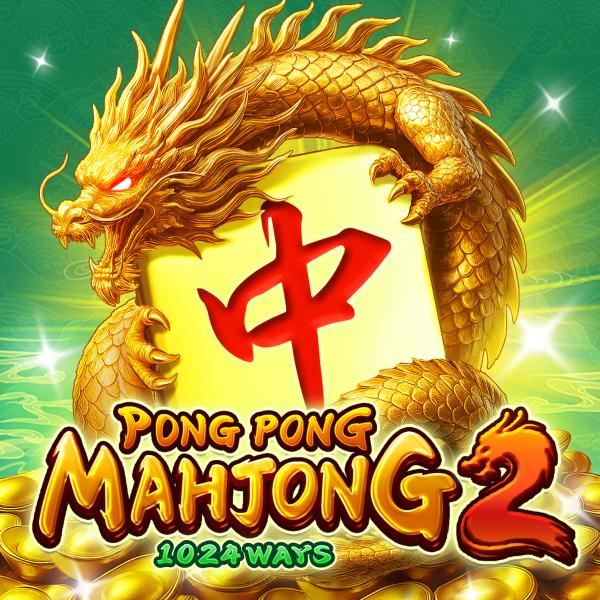
Pong Pong Mahjong Deep Dive: Cascades, Chains and the Oriental-Fortune Theme
Abstract mechanics only go so far, so this piece lands on a concrete game: Pong Pong Mahjong, a popular title on the site. It is a classic Microgaming cascade slot that uses mahjong tiles as symbols. Take it apart thoroughly and you can generalize to any cascade game.
Cascades: one bet, multiple settlements
A traditional slot settles per "one spin": reels stop, pay by line or by ways, done. Cascade games are different — a single spin can settle several waves. Pong Pong Mahjong runs like this:
- the board lands, and mahjong symbols that form a combination settle a first win;
- those winning symbols vanish, and symbols above drop in to fill the gaps;
- if the drop forms a new combination, it settles another wave, looping until no new combinations form.
So you see "several hits in a row within one bet" — that is not a bug, it is the core rhythm of the cascade mechanic.
Chains and multipliers: big-win potential rests on the chain
Cascade games often tie the multiplier to the number of chained waves: the more waves, the higher the multiplier tends to climb. That means the big-win potential rests on "whether it can keep chaining", not on any single settlement. The trade-off is that each wave pays smaller, and the rhythm depends more on luck keeping the chain going.
The Pong Pong Mahjong series (the site also lists Pong Pong Mahjong 2 and Pong Pong Mahjong Jackpots) is a set of variants built around this chain: some add a jackpot layer, some tweak the multiplier structure, but the underlying clear-and-drop skeleton is consistent. See that and you never have to relearn all three.
The "one tile short" illusion, and using the demo to see through it
Cascade games are especially good at manufacturing the "one tile short of completing" thrill — the drop where it just fails to connect gives you a jolt close to a real hit, yet it has no bearing on the next wave. This is the near-miss effect, designed to keep you going; it is not a probability signal.
The cheapest way to see its real rhythm is the site’s official free demo of Pong Pong Mahjong (virtual credits), watching three things deliberately: how many waves the base game chains on average, at which wave the multiplier starts climbing, and how long the dry spells run. Learn the mechanic before you decide whether to open it — far better than going on feel. Its theoretical RTP and max win follow the official or operator notes; we present them faithfully and never invent undisclosed values.
FAQ
Several cascades in a row on Pong Pong Mahjong — did I hit a big win?
Multiple cascades are the normal rhythm of the mechanic, and each wave usually pays little. The real big win depends on how high the multiplier stacks, which relies on the chain continuing — a random outcome.
How do Pong Pong Mahjong, Pong Pong Mahjong 2 and Pong Pong Mahjong Jackpots differ?
The theme skins are similar and all share the clear-and-drop skeleton; the differences are in the multiplier structure or whether a jackpot layer is added. Learn the cascade mechanic and all three read the same way.
Can a free demo verify whether it pays well?
No. A free demo uses virtual credits, so its results have nothing to do with real-money math; it helps you see the mechanic and rhythm (how many waves, how long the dry spells), not verify the long-run real-money result.